Unit 26 Swansea Market, United Kingdom

Where Does the Name “Baklava” Come From?
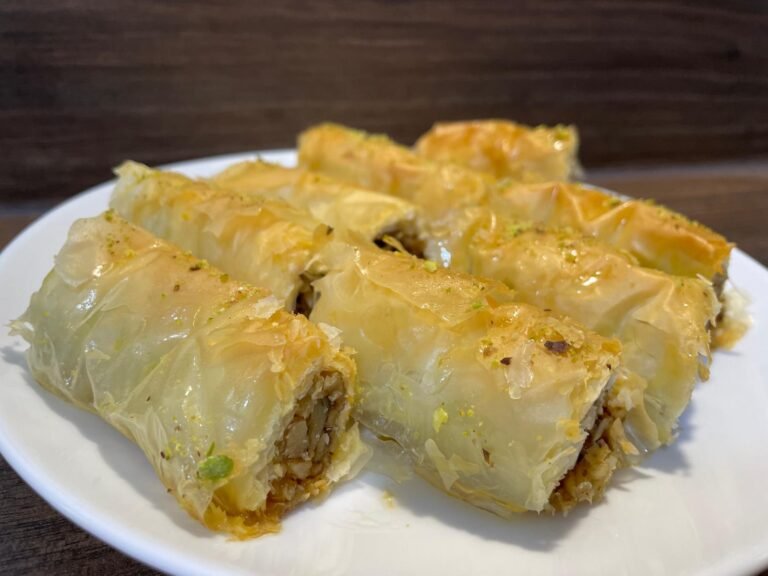
The exact origin of the word baklava is still debated among historians and linguists. However, most scholars agree that the name likely comes from Turkic languages.
One popular theory suggests that the word comes from the old Turkic root “baklağu” or “baklağı”, which means “to pile up” or “to layer.” This meaning fits perfectly with the way baklava is made — by stacking many thin layers of pastry.
Another theory traces the word to Mongolic or Central Asian languages, which later influenced Turkish vocabulary during the expansion of Turkic and Mongol empires across Asia and the Middle East.
As the Ottoman Empire expanded, baklava spread across the Middle East, the Balkans, and the Mediterranean. With it, the name traveled too — changing slightly in pronunciation but remaining largely recognizable:
- Turkish: Baklava
- Arabic: بقلاوة (Baqlawa)
- Greek: Μπακλαβάς (Baklavas)
- Persian: باقلوا (Baghlava)
Despite regional variations in ingredients and preparation, the name has remained remarkably consistent, highlighting its deep historical roots. The word baklava represents more than just a dessert — it tells a story of migration, empire, cultural exchange, and shared culinary heritage. Each bite carries centuries of tradition layered just like its delicate pastry sheets.
At Treat & Eat, we celebrate this rich heritage by serving baklava made with care, tradition, and premium ingredients — bringing you a true taste of history.